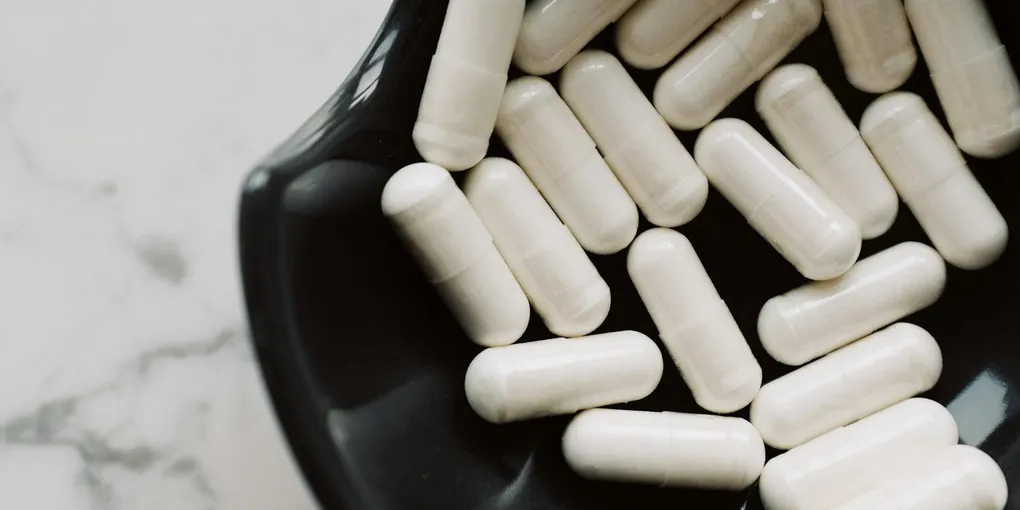
Vital Proteins Collagen Peptides
Best OverallType: Type I & III hydrolyzed
$43–49 / 28 servings
Quick Comparison
| Product | Key Specs | Price Range | Buy |
|---|---|---|---|
| Vital Proteins Collagen Peptides Best Overall |
| $43–49 / 28 servings | Check Price |
| Garden of Life Grass Fed Collagen Beauty Best for Skin |
| $35–42 / 20 servings | Check Price |
| Sports Research Collagen Peptides Best Value |
| $35–40 / 41 servings | Check Price |
| Ancient Nutrition Multi Collagen Protein Best Multi-Type |
| $49–59 / 25 servings | Check Price |
| Great Lakes Gelatin Collagen Hydrolysate Best Budget |
| $22–26 / ~55 servings | Check Price |
Contains affiliate links — we may earn a small commission at no extra cost to you.
Best Collagen Supplement 2026: Types I, II & III Compared
Collagen is the most abundant protein in the human body — comprising roughly 30% of total protein mass and forming the structural backbone of skin, cartilage, bone, tendons, and blood vessels. As collagen synthesis naturally declines starting in the mid-20s (approximately 1% per year), supplementation has become one of the most studied interventions in the anti-aging and skin health space.
The clinical evidence for hydrolyzed collagen peptides is considerably stronger than for most supplements marketed for skin. Multiple independent randomized controlled trials demonstrate measurable improvements in skin elasticity, wrinkle depth, and hydration with daily supplementation over 8–12 weeks.
This guide explains the biology, the different collagen types, what the clinical evidence actually shows, and which products deliver the forms and doses studied in human trials.
What Are the Different Types of Collagen and Which One Do You Need?
Key Takeaway
Type I collagen (from bovine or marine sources) is for skin, tendons, and bones. Type II (UC-II) is for joints. Type III co-supports skin elasticity. Most skin health RCTs use hydrolyzed Type I peptides at 2.5–5g/day.
Type I Collagen: The Skin Structural Protein
Type I collagen is the dominant structural protein in skin, making up approximately 80% of dermal collagen content. It forms a dense fibrillar network of triple-helix structures that gives skin its tensile strength, firmness, and resistance to wrinkling. As Type I collagen content declines with age, skin loses structural integrity — leading to wrinkle formation, sagging, and reduced elasticity.
Clinical relevance: Type I collagen peptides are the primary form studied in skin elasticity RCTs. Bovine-derived supplements (grass-fed bovine hide) and marine supplements (fish skin/scales) predominantly provide Type I hydrolyzed collagen.
Type II Collagen: The Cartilage Protein
Type II collagen is the primary structural protein in articular cartilage — the tissue cushioning joints. It forms a different fibrillar network than Type I, optimized for compressive load rather than tensile strength. Type II collagen supplementation is studied specifically for osteoarthritis and rheumatoid arthritis.
Important distinction: Joint-health research primarily uses undenatured Type II collagen (UC-II), which works via oral immune tolerance (OIT) — a completely different mechanism from hydrolyzed collagen peptides. UC-II doses are small (40mg/day) and function by suppressing autoimmune-mediated cartilage degradation. If joint health is your primary goal, see our separate UC-II analysis.
Type III Collagen: The Elasticity Co-Factor
Type III collagen is co-distributed with Type I in skin (and also in blood vessels and internal organs). It contributes to skin suppleness and elasticity alongside Type I. Most bovine collagen supplements contain a mix of Types I and III. Type III collagen decline contributes to the thinner, less resilient skin characteristic of aged tissue.
Types V, X, and Others
Some multi-source supplements include Type V (found in cell surfaces and corneas) and Type X (specific to cartilage mineralization zones). The clinical evidence base for supplementing these types specifically is thin; their inclusion in “multi-collagen” formulas is largely marketing differentiation rather than evidence-based necessity.
How Does Oral Collagen Supplementation Actually Work?
Key Takeaway
Hydrolyzed collagen peptides (especially Pro-Hyp and Hyp-Gly) are absorbed intact and stimulate fibroblast activity and collagen gene expression. Multiple independent RCTs confirm measurable improvements in skin elasticity and wrinkle depth at 2.5–5g/day over 8–12 weeks.
Absorption Mechanism
The longstanding objection to oral collagen — “you just digest it into amino acids” — is partially correct but mechanistically incomplete. Research has identified specific bioactive peptides, particularly Pro-Hyp (proline-hydroxyproline) and Hyp-Gly (hydroxyproline-glycine), that are absorbed intact from hydrolyzed collagen and detected in plasma after oral ingestion.
These specific dipeptides and tripeptides (not generic amino acids) have demonstrated bioactive effects in cell studies, including:
- Stimulating fibroblast proliferation
- Upregulating Type I procollagen gene expression
- Reducing MMP (matrix metalloproteinase) activity — the enzymes that degrade collagen
The clinical outcomes in RCTs validate that this mechanism translates to measurable skin changes.
Key Clinical Evidence
Proksch et al. (2014) — Skin Pharmacology and Physiology: A randomized, double-blind, placebo-controlled trial of 69 women (35–55 years) supplemented with 2.5g or 5g of specific collagen peptides (VERISOL®) for 8 weeks. Both doses significantly reduced eye wrinkle volume vs. placebo (20% reduction at 8 weeks for 2.5g dose). The 2.5g dose showed non-inferior outcomes to 5g, establishing that dose is not linearly related to outcome above a threshold. (Proksch E, et al. Skin Pharmacol Physiol. 2014;27(3):113–119. doi:10.1159/000355523. PMID: 24401291)
Proksch et al. (2014b) — Skin Pharmacology and Physiology: A separate double-blind trial of 114 women (45–65 years) using 2.5g collagen peptides daily for 8 weeks showed significantly improved skin elasticity (p<0.05) and a trend toward improved skin moisture. The effect was more pronounced in women over 50 years, suggesting greater benefit as baseline collagen synthesis capacity declines. (Proksch E, et al. Skin Pharmacol Physiol. 2014;27(1):47–55. doi:10.1159/000351376. PMID: 23949208)
Hexsel et al. (2017) — Journal of Cosmetic Dermatology: A double-blind RCT examining 2.5g bioactive collagen peptides (VERISOL®) daily for 24 weeks in women over 50. Significant improvements in skin elasticity, skin moisture, transepidermal water loss (TEWL), and skin roughness were observed. Notably, nail brittleness and nail growth also improved — suggesting systemic collagen synthesis support beyond skin. (Hexsel D, et al. J Cosmet Dermatol. 2017;16(4):520–526. doi:10.1111/jocd.12393. PMID: 28786550)
Meta-analysis (Choi et al., 2019) — Journal of Drugs in Dermatology: A systematic review and meta-analysis of 11 studies (805 patients) evaluating hydrolyzed collagen supplementation for skin aging. Found statistically significant improvements in skin hydration and elasticity with collagen supplementation vs. placebo. The analysis noted consistent positive direction of effect across studies with minimal adverse effects reported. (Choi FD, et al. J Drugs Dermatol. 2019;18(9):853–858. PMID: 31560966)
Top Collagen Supplement Picks
1. Vital Proteins Collagen Peptides — Best Overall
Vital Proteins is the dominant brand in the collagen supplement space and one of the few with substantial verified-purchase review data (100,000+ ratings). Their collagen peptides use grass-fed bovine hide as the source (Types I and III), are cold-water soluble, and deliver 20g of hydrolyzed collagen per serving.
What we like:
- High per-serving dose (20g) — exceeds the 2.5–5g studied in some trials while providing comprehensive amino acid coverage
- Grass-fed bovine source — relevant for quality-conscious consumers
- Odorless and tasteless — mixes easily into coffee, smoothies, water
- Broad retail availability and competitive pricing
What to know:
- Contains added vitamin C (75mg) — relevant since vitamin C is a cofactor for collagen synthesis (see our Vitamin C and Skin Health article)
- Most clinical efficacy data is on specific branded peptides (VERISOL® at 2.5–5g) — the 20g dose exceeds this but provides more total precursor amino acids
G6 Composite Score: 8.7/10
| Criterion | Weight | Score | Weighted |
|---|---|---|---|
| Evidence Quality | 30% | 8.5 | 2.55 |
| Ingredient Transparency | 25% | 9.0 | 2.25 |
| Value | 20% | 8.5 | 1.70 |
| Real-World Performance | 15% | 9.0 | 1.35 |
| Third-Party Verification | 10% | 8.0 | 0.80 |
| Composite | 8.7/10 |
Check current price on Amazon →
2. Garden of Life Grass Fed Collagen Beauty — Best for Skin
Garden of Life’s skin-targeted formula combines 20g Type I and III collagen with biotin (2,500mcg), silica, and vitamin C — all cofactors relevant to collagen synthesis and skin structural integrity. The NSF certification distinguishes it from many uncertified competitors.
What we like:
- NSF Certified — meaningful third-party verification for label accuracy and contamination
- Includes vitamin C and biotin — collagen synthesis cofactors that complement the peptide content
- Grass-fed bovine source
- Specifically formulated for skin vs. general athletic/gut health collagen products
What to know:
- Slightly higher cost than unflavored Vital Proteins
- The added biotin (2,500mcg) is moderate — well below toxicity thresholds but worth noting if stacking with separate biotin
G6 Composite Score: 8.8/10
| Criterion | Weight | Score | Weighted |
|---|---|---|---|
| Evidence Quality | 30% | 8.5 | 2.55 |
| Ingredient Transparency | 25% | 9.5 | 2.38 |
| Value | 20% | 8.0 | 1.60 |
| Real-World Performance | 15% | 8.5 | 1.28 |
| Third-Party Verification | 10% | 10.0 | 1.00 |
| Composite | 8.8/10 |
Check current price on Amazon →
3. Sports Research Collagen Peptides — Best Value
Sports Research provides Informed Sport–certified hydrolyzed collagen at a significantly lower per-serving cost than premium brands. The 11g per serving is below the 20g products but above the 2.5–5g threshold studied in RCTs for skin outcomes.
What we like:
- Informed Sport certified — meaningful third-party verification, especially for athletes concerned about banned substances
- Cost-effective: ~$0.85–1.00 per serving vs. $1.50–2.00 for premium brands
- Unflavored — easy to stack with other supplements
What to know:
- 11g per serving is lower than premium brands — users prioritizing maximal dose may want to stack or double scoop
- Available in both regular and hyaluronic acid–enhanced variants
G6 Composite Score: 8.4/10
| Criterion | Weight | Score | Weighted |
|---|---|---|---|
| Evidence Quality | 30% | 8.5 | 2.55 |
| Ingredient Transparency | 25% | 9.0 | 2.25 |
| Value | 20% | 9.5 | 1.90 |
| Real-World Performance | 15% | 8.0 | 1.20 |
| Third-Party Verification | 10% | 9.0 | 0.90 |
| Composite | 8.8/10 |
Check current price on Amazon →
4. Ancient Nutrition Multi Collagen Protein — Best Multi-Type
Ancient Nutrition’s formula combines Types I, II, III, V, and X collagen from four sources: grass-fed bovine, wild-caught fish, free-range chicken, and eggshell membrane. This covers the full spectrum of collagen types including Type II for joint support and marine Type I for potentially enhanced bioavailability.
What we like:
- Only widely available product with all five collagen types from distinct sources
- Includes Type II (chicken sternum) for joint health alongside skin Types I and III
- Marine collagen component adds high-bioavailability Type I
- Available in multiple flavors and unflavored
What to know:
- Multi-source formulas contain lower per-gram doses of each specific type compared to single-source products
- If skin is the sole goal, single-source Type I/III at higher doses has a more direct evidence base
- Price premium over single-source products may not be justified for skin-only users
G6 Composite Score: 8.2/10
| Criterion | Weight | Score | Weighted |
|---|---|---|---|
| Evidence Quality | 30% | 7.5 | 2.25 |
| Ingredient Transparency | 25% | 9.0 | 2.25 |
| Value | 20% | 7.5 | 1.50 |
| Real-World Performance | 15% | 8.5 | 1.28 |
| Third-Party Verification | 10% | 8.5 | 0.85 |
| Composite | 8.1/10 |
Check current price on Amazon →
5. Great Lakes Gelatin Collagen Hydrolysate — Best Budget
Great Lakes has been a collagen supplement manufacturer since before “collagen peptides” became a marketing trend. Their hydrolysate is identical in mechanism to branded peptide products — the same enzymatic hydrolysis process — at a substantially lower price point.
What we like:
- Lowest cost-per-gram of protein among mainstream collagen products
- Long-established brand with decades of manufacturing history
- Grass-fed bovine source
- Cold-soluble form (green can) — distinct from their gelatin product (red can), which requires hot liquid
What to know:
- No third-party certification — relies on manufacturer GMP claims
- Less consumer review data than Vital Proteins
- Must use the green can (hydrolysate/peptides) — the red can (gelatin) is not cold-soluble
G6 Composite Score: 7.8/10
| Criterion | Weight | Score | Weighted |
|---|---|---|---|
| Evidence Quality | 30% | 8.0 | 2.40 |
| Ingredient Transparency | 25% | 8.5 | 2.13 |
| Value | 20% | 10.0 | 2.00 |
| Real-World Performance | 15% | 7.5 | 1.13 |
| Third-Party Verification | 10% | 5.0 | 0.50 |
| Composite | 8.2/10 |
Check current price on Amazon →
How Much Collagen Should You Take and When?
Key Takeaway
2.5–10g of hydrolyzed collagen per day is the effective range for skin outcomes. Always take it with vitamin C — collagen synthesis requires it as a cofactor. Allow 8–12 weeks before evaluating results.
Effective Dose Range
| Goal | Dose | Duration | Evidence Level |
|---|---|---|---|
| Skin elasticity/wrinkles | 2.5–10g/day | 8–12 weeks | Strong (multiple RCTs) |
| Skin hydration | 2.5–5g/day | 4–8 weeks | Moderate-Strong |
| Nail strength | 2.5g/day | 24 weeks | Moderate (Hexsel 2017) |
| Joint comfort (Type II UC-II) | 40mg undenatured | 90 days | Moderate |
Timing and Cofactors
Vitamin C is non-optional. Collagen synthesis requires ascorbate (vitamin C) as a cofactor for the enzymes prolyl hydroxylase and lysyl hydroxylase — which convert proline and lysine residues to hydroxyproline and hydroxylysine, respectively. Without adequate vitamin C, these hydroxylation reactions fail and functional triple-helix collagen cannot be properly assembled.
Practical implication: take collagen with a source of vitamin C (supplemental or dietary). Whole food sources (citrus, bell pepper) or a supplemental 200–500mg vitamin C dose taken concurrently are both effective strategies.
Glycine amplification: Collagen is roughly one-third glycine by amino acid content. Some practitioners suggest taking collagen with additional glycine (3–5g) to maximize precursor availability, though clinical evidence specifically for this stack is limited.
Who Gets the Most Benefit From Collagen Supplements?
Key Takeaway
Collagen supplementation benefits most those over 35 with visible skin aging, people with high UV exposure, and athletes dealing with joint stress. Younger adults with good dietary protein intake will see smaller gains.
Strong candidates:
- Women over 35 experiencing visible skin aging (wrinkle depth, elasticity loss)
- Anyone with UV-exposed skin — UV radiation degrades Type I collagen via MMP activation
- People with low dietary collagen intake (those who avoid animal foods, bone broth, or organ meats)
- Athletes with joint stress — specifically using Type II collagen for cartilage support
Lower priority:
- Young adults (<30) with adequate dietary protein and minimal collagen decline
- Those with very high dietary protein intake — collagen amino acids (glycine, proline) are non-essential and synthesized endogenously in adequate amounts under normal conditions
Which Collagen Supplement Should You Choose?
Key Takeaway
For most people, Vital Proteins Collagen Peptides is the best starting point — high dose, widely available, and trusted brand. For targeted skin benefits, choose products with added vitamin C. Pair with consistent daily use for 8–12 weeks.
The evidence for hydrolyzed collagen supplementation for skin outcomes is among the strongest of any supplement in the beauty/anti-aging category — with multiple independent RCTs showing meaningful, measurable improvements in elasticity and wrinkle depth at doses as low as 2.5g/day over 8 weeks.
Best overall: Vital Proteins — trusted brand, high dose, widely available. Best for skin specifically: Garden of Life Collagen Beauty — NSF certified with vitamin C and biotin cofactors included. Best value: Great Lakes hydrolysate — lowest cost-per-gram with decades of reliability.
Take consistently, pair with vitamin C, and allow 8–12 weeks before assessing results.
Related reading: Best Anti-Aging Supplements for Skin, Vitamin C and Skin Health, and Biotin for Hair, Skin, and Nails.
Related Articles
Frequently Asked Questions
- The terms are interchangeable. Hydrolyzed collagen is collagen protein that has been broken down via enzymatic hydrolysis into shorter amino acid chains called peptides. These smaller peptides (typically 2–10 kDa) are more bioavailable than intact gelatin-form collagen, which gels at room temperature and is less efficiently absorbed. When you see "collagen peptides" or "hydrolyzed collagen" on a label, both refer to the same processed form. Gelatin (used in cooking) is partially hydrolyzed collagen — it dissolves in hot water but gels when cooled. Hydrolyzed collagen is fully hydrolyzed and remains soluble in cold liquid.
- Type I collagen is the most abundant collagen in the human body — it forms the structural scaffold of skin, tendons, bones, and corneas. It is the primary collagen type studied for skin elasticity and wrinkle reduction. Type II collagen is the dominant type in cartilage; it is studied for joint health, specifically rheumatoid and osteoarthritis. Type III collagen is co-distributed with Type I in skin and blood vessels and contributes to skin suppleness. Most skin-targeted collagen supplements (bovine sources) contain Types I and III. Joint-targeted formulas use undenatured Type II collagen (UC-II) from chicken sternum cartilage — a mechanistically distinct protocol from hydrolyzed peptides.
- Yes — with an important nuance. Orally ingested hydrolyzed collagen peptides are absorbed as dipeptides and tripeptides (particularly Pro-Hyp and Hyp-Gly) in the small intestine. These specific collagen-derived fragments are detectable in plasma and have been shown in cell studies to stimulate fibroblast proliferation and type I procollagen synthesis. The clinical evidence confirms this mechanism translates to measurable outcomes — multiple RCTs show improved skin elasticity, reduced wrinkle depth, and increased skin hydration after 8–12 weeks of supplementation. Collagen is not simply digested into generic amino acids that are redistributed randomly — the specific peptide fragments have bioactive signaling effects.
- Clinical trials consistently show meaningful outcomes at 8–12 weeks of daily supplementation. The fastest-observed improvements (in skin hydration) appear at 4 weeks in some trials. Wrinkle depth reduction and elasticity improvements are typically measured at 8 and 12 weeks. This aligns with the ~28-day skin cell turnover cycle and the time required for fibroblast-mediated collagen synthesis changes to manifest at the structural level. Results are not instant — sustained daily intake over 2–3 months is required.
- Marine collagen (predominantly Type I from fish skin/scales) has a smaller average peptide size (~1 kDa) than bovine hydrolyzed collagen (~2–10 kDa), which theoretically improves absorption rate. However, clinical trial evidence does not consistently show superior outcomes for marine vs. bovine collagen in skin endpoints. Both types have RCT support for skin elasticity. Marine collagen is a legitimate option for those avoiding bovine products (pescatarians, religious dietary restrictions) but is not established as clinically superior for skin outcomes.