Real Mushrooms Turkey Tail
Best OverallForm: Hot water extract, fruiting body
$30–38 (60 caps)
Quick Comparison
| Product | Key Specs | Price Range | Buy |
|---|---|---|---|
| Real Mushrooms Turkey Tail Best Overall |
| $30–38 (60 caps) | Check Price |
| Host Defense Turkey Tails Best Mycelium Option |
| $22–30 (60 caps) | Check Price |
| Mushroom Revival Turkey Tail Best Dual-Extract |
| $30–40 (60 caps) | Check Price |
| Double Wood Turkey Tail Best Budget Pick |
| $16–22 (120 caps) | Check Price |
| Om Mushroom Turkey Tail Best Whole-Food Blend |
| $24–32 (90 caps) | Check Price |
Contains affiliate links — we may earn a small commission at no extra cost to you.
Best Turkey Tail Mushroom Supplement 2026: Top Picks Ranked
Turkey tail (Trametes versicolor) is the most clinically researched medicinal mushroom on the planet. Unlike most functional supplements where the evidence is thin and human trials are scarce, turkey tail has an unusually robust body of research — including pharmaceutical applications, hundreds of clinical trials, and FDA-approved studies. Its polysaccharopeptides PSK and PSP are the most studied mushroom compounds in human medicine.
The problem isn’t whether turkey tail works. The problem is that most turkey tail products on the market are poorly extracted, use mycelium grown on grain rather than the fruiting body, and disclose no standardized beta-glucan content. Buying the wrong product means paying for grain starch with mushroom branding.
This guide ranks the best turkey tail mushroom supplements for 2026, explains what the science actually shows, and gives you the label criteria that separate quality products from shelf fillers.
What Turkey Tail Actually Does (The Science)
Turkey tail contains two primary classes of bioactive compounds: PSK (polysaccharide K) and PSP (polysaccharide peptide), along with broader beta-glucan polysaccharides. These drive the most studied effects.
PSK and PSP — immune modulation at the clinical level: PSK (marketed as Krestin in Japan) is a licensed pharmaceutical agent derived from turkey tail used as an immunotherapy adjuvant in cancer treatment. Over 400 clinical trials have investigated PSK, primarily for colorectal, gastric, and lung cancer patients receiving it alongside chemotherapy and radiation. The mechanism is well-characterized: PSK and PSP bind to pattern recognition receptors (Dectin-1, TLR-2/6) on macrophages and dendritic cells, increasing natural killer cell activity and modulating cytokine profiles toward a more balanced immune response.
Gut health and microbiome diversity: Turkey tail is arguably the best-studied prebiotic mushroom. A 2014 study published in ISRN Oncology demonstrated that turkey tail polysaccharides selectively increased Lactobacillus and Bifidobacterium populations while reducing pathogenic species like Clostridium and Staphylococcus. The effect was dose-dependent and consistent across subjects. This prebiotic activity supports microbiome diversity — increasingly recognized as a foundational driver of immune function, metabolic health, and even mood regulation.
Cancer adjuvant research: The FDA has approved Investigational New Drug (IND) status for turkey tail polysaccharide extract in prostate cancer studies. The adjuvant evidence is strongest for colorectal cancer (PSK significantly improved 5-year survival in several Japanese trials) and gastric cancer. This is notable — turkey tail is not a treatment, but the evidence for its role as a complement to conventional therapy is more substantial than virtually any other functional mushroom.
Third-party testing and standardization: Unlike most mushroom supplements, turkey tail’s active compounds have pharmaceutical-grade reference standards. This means beta-glucan content — specifically PSK/PSP fraction — can be independently verified. Products that disclose this data and provide COAs are meaningfully different from those that don’t.
What to Look for in a Turkey Tail Supplement
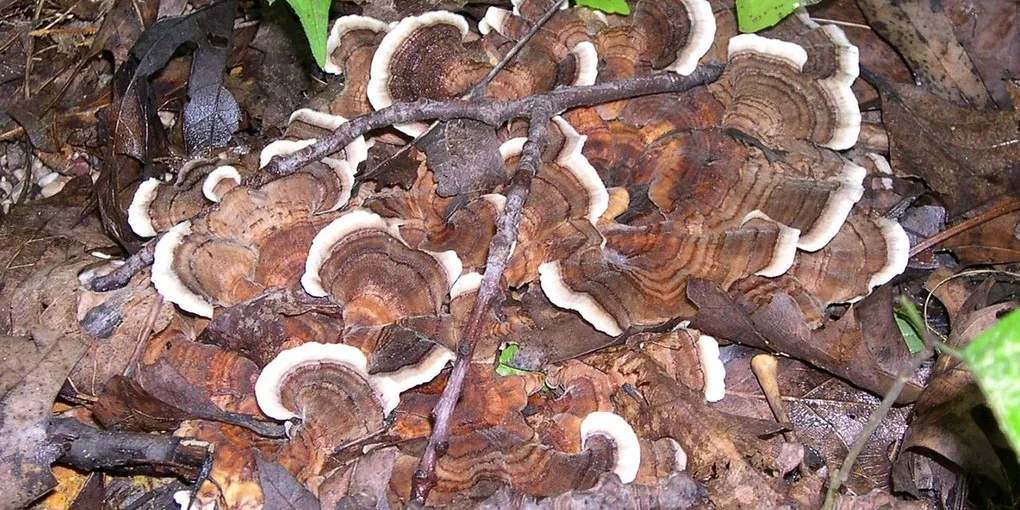
Fruiting body vs. mycelium on grain: The fruiting body is the fan-shaped, multicolored mushroom visible on tree bark. The mycelium is the underground root network. PSK and PSP are concentrated in the fruiting body. Mycelium-on-grain products — common in the US market because they’re cheaper to produce — often contain significant brown rice or oat starch content, diluting the active compound concentration per gram. If a label says “mycelium” or doesn’t specify “fruiting body,” treat it skeptically.
Beta-glucan content, verified by COA: Target products that disclose beta-glucan content of 30% or higher, backed by third-party certificate of analysis. “Polysaccharide content” is frequently used as a proxy — but polysaccharides include grain starch, which inflates the number without adding immune activity. Beta-glucan specifically is the metric that matters.
Hot water extraction: PSK and PSP are water-soluble polysaccharides — they require hot water extraction to become bioavailable. Raw dried turkey tail powder is largely indigestible and has minimal bioavailability. Extraction method should be stated on the label.
PSK/PSP disclosure: A small number of premium brands specifically disclose PSK or PSP content. This level of standardization provides the strongest quality signal — these are the compounds that clinical researchers actually measure.
Top Turkey Tail Mushroom Supplement Picks
1. Real Mushrooms Turkey Tail — Best Overall
Real Mushrooms sets the quality standard in the functional mushroom category, and their turkey tail is no exception. Certified organic fruiting body, hot water extracted, standardized to >30% beta-glucans with COA documentation. No mycelium on grain. Full supply chain transparency with third-party identity, heavy metal, and microbial testing.
This is the product most closely aligned with what researchers use when studying turkey tail’s immune and gut effects.
What we like:
- Certified organic fruiting body — not mycelium on grain
- Verified >30% beta-glucans, COA available and disclosed
- PSK/PSP polysaccharides standardized
- Third-party tested for identity, heavy metals, and microbials
- Available in capsules and powder formats
- The most transparent sourcing in the category
What to know:
- Higher price than budget options (~$0.50–0.65/serving)
- Not always stocked at physical retail locations
Best for: Anyone prioritizing verified potency and the closest alignment with clinical research formulations.
Check current price on Amazon →
2. Host Defense Turkey Tails — Best Mycelium-Based Option
Host Defense by Paul Stamets is the most credible brand in the mycelium supplement category. Their turkey tail uses myceliated brown rice processed through a proprietary fermentation system. Stamets argues this approach yields unique prebiotic and immunomodulatory compounds that differ from fruiting body extracts — a legitimate scientific debate, not pure marketing.
As a mycelium product, Host Defense is the best of its class. But the tradeoff versus fruiting body extracts should be understood clearly.
What we like:
- Paul Stamets’ deep mycological expertise and research involvement
- Certified organic substrate
- Consistent quality control and formulation
- Widely available at health food retailers nationwide
- Strong brand transparency about their mycelium methodology
What to know:
- Contains myceliated brown rice — some grain starch content expected
- Beta-glucan and PSK/PSP content not independently verified at fruiting body standards
- Per-gram potency is likely lower than hot water extracted fruiting body products
Best for: Those who align with Paul Stamets’ approach to mycelium supplementation and want the most reputable product in that category.
Check current price on Amazon →
3. Mushroom Revival Turkey Tail — Best Dual-Extract
Mushroom Revival uses a dual-extraction approach that combines fruiting body and mycelium in a single product. They’re transparent about their sourcing, state beta-glucan content, and position themselves clearly as a science-forward brand. Their turkey tail is one of the better mid-market options — higher quality than generic Amazon brands, with cleaner sourcing than many budget competitors.
What we like:
- Dual-extract approach (fruiting body primary source)
- Beta-glucan content stated on the label
- Sustainable sourcing emphasis
- Available in capsule and tincture formats
- Good customer transparency around their process
What to know:
- PSK/PSP content is partially disclosed but not fully COA-verified at Real Mushrooms’ level
- Price is comparable to premium brands without matching their third-party documentation
- Smaller batch production may mean more stock variability
Best for: Those who want a quality mid-market option with a good brand story and dual-extract approach.
Check current price on Amazon →
4. Double Wood Turkey Tail Extract — Best Budget Pick
Double Wood offers a solid value proposition — fruiting body extract with stated beta-glucan content at roughly 40–50% lower price than premium brands. Their supply chain transparency is more limited than Real Mushrooms or Mushroom Revival, but they clearly state fruiting body source and provide partial third-party test results.
For budget-conscious buyers who still want a fruiting body product, Double Wood is a reasonable choice — with the understanding that verification depth is lower.
What we like:
- Fruiting body extract — not mycelium on grain
- Beta-glucan content stated on label
- Competitive price (~$0.13–0.19/serving at 120 caps)
- Consistent availability on Amazon
- Larger bottle size provides better cost-per-day value
What to know:
- COA transparency is limited compared to premium brands
- PSK/PSP content not disclosed
- Brand is a generalist supplement company, not a mushroom specialist
Best for: Budget buyers who want a fruiting body extract without premium pricing.
Check current price on Amazon →
5. Om Mushroom Turkey Tail — Best Whole-Food Blend
Om Mushroom takes a whole-food mycelium approach, producing high-biomass mycelium rather than isolated extracts. Their turkey tail is organically certified with stated beta-glucan content and a higher serving size (2,000mg/3 caps). Om is popular with buyers who prefer a minimally processed, full-spectrum approach over concentrated extracts.
What we like:
- USDA Organic certified
- High-dose serving size (2,000mg/day at 3 caps)
- Widely available at Whole Foods, Sprouts, and online
- Accessible branding and clear consumer education
- Also available in powder format for smoothie stacking
What to know:
- Mycelium-based, not fruiting body extract — lower PSK/PSP density expected
- Beta-glucan content stated but not COA-verified at Real Mushrooms’ standard
- Higher per-serving cost given the 3-capsule serving requirement
Best for: Buyers who want an organic whole-food mycelium product from a widely available brand.
Check current price on Amazon →
Turkey Tail Supplement Comparison
| Feature | Real Mushrooms | Host Defense | Mushroom Revival | Double Wood | Om Mushroom |
|---|---|---|---|---|---|
| Source | Fruiting body | Mycelium on grain | Dual extract | Fruiting body | Mycelium (whole food) |
| Extraction | Hot water | Fermentation | Dual extract | Hot water | Not specified |
| Beta-glucans verified | >30% COA ✓ | Not disclosed | Stated | Stated | Stated |
| PSK/PSP disclosed | Yes ✓ | No | Partial | No | No |
| Third-party tested | Full COA | Limited | Partial | Partial | Partial |
| Price/serving | ~$0.50–0.65 | ~$0.37–0.50 | ~$0.50–0.67 | ~$0.13–0.19 | ~$0.27–0.36 |
| Best for | Verified quality | Stamets trust | Mid-market | Budget | Whole food blend |
Dosage, Timing, and Stacking
Dosing: Clinical studies on PSK and PSP used 1,000–3,000mg of standardized extract daily. For general immune support and gut health, 1,000–2,000mg daily from a quality fruiting body extract is well-supported. Higher doses (3,000mg+) are used in research settings under medical supervision and are not necessary for wellness use.
Timing: Unlike reishi or ashwagandha, turkey tail’s primary compounds (PSK, PSP) are not calming or stimulating — timing is not critical. Morning with food is the most practical approach. Taking with food improves tolerability and absorption.
Timeline:
- Week 1–2: Limited acute effects; compounds are accumulating
- Week 3–6: Microbiome effects become measurable; users with dysbiosis often notice improved digestion and regularity
- Week 6–12: Full immune modulation effects are most apparent; research-supported benefits require consistent daily use
Stacking: Turkey tail pairs naturally with several other functional supplements:
- Lion’s mane: Lion’s mane supports neurogenesis and cognitive function via NGF; turkey tail covers immune modulation and microbiome support. A logical pairing. See our best lion’s mane mushroom supplement guide.
- Prebiotics and probiotics: Turkey tail’s prebiotic activity synergizes with probiotic supplementation — together they support microbiome diversity from both the top-down (fermented organisms) and substrate level. See our best gut health supplements guide.
- Full mushroom stack: Turkey tail fits naturally into a complete functional mushroom protocol alongside reishi (immune + stress) and cordyceps (energy + performance). See our best mushroom supplement stack for the full breakdown.
Who Should Consider Turkey Tail
Strong candidates:
- Anyone focused on immune system optimization, particularly during cold/flu season
- People with gut dysbiosis or low microbiome diversity
- Those undergoing or recovering from illness (always discuss with your physician)
- Anyone building a functional mushroom protocol — turkey tail is a foundational addition
- Cancer patients and survivors (discuss with oncologist — turkey tail is an adjuvant, not a replacement for treatment)
Use with caution / consult physician:
- Immunosuppressant medications: Turkey tail’s immune-modulating effects may interact with immunosuppressants (common in organ transplant recipients and some autoimmune treatments).
- Autoimmune conditions: The immune-activating properties of PSK/PSP could theoretically exacerbate certain autoimmune conditions. Discuss with your rheumatologist before supplementing.
- Pregnancy/breastfeeding: Insufficient safety data — avoid until more is known.
Frequently Asked Questions
Does turkey tail actually support immune function?
Yes — turkey tail is arguably the most clinically studied medicinal mushroom for immune support. Its polysaccharopeptides PSK and PSP are licensed pharmaceutical agents in Japan and China for use alongside cancer treatment. PSK has been studied in over 400 clinical trials as an immune adjuvant. The mechanism — beta-glucan activation of Toll-like receptors and Dectin-1 on macrophages and dendritic cells — is well-established. Turkey tail modulates immune activity rather than simply stimulating it, making it appropriate for long-term use.
Can turkey tail improve gut health?
Turkey tail is one of the most documented prebiotic mushrooms available. A 2014 study in ISRN Oncology found turkey tail polysaccharides selectively promoted growth of beneficial Lactobacillus and Bifidobacterium while suppressing pathogenic species. This prebiotic effect supports microbiome diversity, which drives both immune competence and metabolic health. For anyone focused on gut health, turkey tail has some of the strongest evidence of any mushroom supplement.
What does the cancer research actually say about turkey tail?
The cancer research is substantial but requires careful framing. PSK from turkey tail is an approved pharmaceutical immunotherapy agent in Japan, used alongside conventional cancer treatment for decades. Multiple trials show PSK improves survival in colorectal, gastric, and lung cancer patients as an adjuvant — meaning it works alongside, not instead of, standard treatment. The FDA has approved clinical trials for turkey tail polysaccharides in prostate cancer. This is promising data, but turkey tail is a complement to conventional care, not a replacement. Always discuss with your oncologist.
What is the correct dosage for turkey tail mushroom?
Clinical studies on PSK and PSP typically used 1,000–3,000mg of standardized extract daily. Most quality supplements are dosed at 1,000–2,000mg per serving. For general immune maintenance and gut health support, 1,000–2,000mg daily is appropriate. Higher doses have been used in oncology research under medical supervision. Consistent daily use over 4–8 weeks yields better results than short-term high-dose use. Always take with food to minimize GI side effects.
What is the difference between turkey tail mycelium and fruiting body?
The fruiting body is the visible fan-shaped mushroom where Trametes versicolor concentrates its polysaccharides, including PSK, PSP, and beta-glucans. Mycelium is the underground root network. Fruiting body hot water extract yields higher and more verifiable concentrations of the specific compounds that drive turkey tail’s researched effects. Mycelium-on-grain products are common in the US market but often contain significant grain starch, diluting active compound density. Look for products specifying fruiting body source with verified beta-glucan content above 30%.
The Bottom Line
For most people: Real Mushrooms Turkey Tail is the best option on the market. Certified organic fruiting body, hot water extracted, with COA-verified beta-glucan content and disclosed PSK/PSP polysaccharides — it’s the closest consumer product to what clinical researchers actually use. Start here.
If you prefer Paul Stamets’ methodology: Host Defense Turkey Tails is the most credible mycelium-based turkey tail available. Understand the potency difference relative to fruiting body extracts, but the brand quality and Stamets’ mycological expertise are legitimate.
For a dual-extract approach: Mushroom Revival offers a reasonable mid-market product with fruiting body as the primary source and a dual-extraction method. A solid choice if you want to split the difference between whole-food and extract approaches.
On a budget: Double Wood delivers a fruiting body extract at a price that significantly undercuts premium brands. Verification depth is lower, but it’s materially better than mycelium-on-grain alternatives at the same price point.
The most important rule: look for fruiting body hot water extract with disclosed beta-glucan content above 30%, ideally COA-verified. If a turkey tail product doesn’t disclose these markers, it’s not worth buying — regardless of price.
Related reading: Best Mushroom Supplement Stack, Best Lion’s Mane Mushroom Supplement, and Best Gut Health Supplements.
Related Articles
Frequently Asked Questions
- Yes — turkey tail is arguably the most clinically studied medicinal mushroom for immune support. Its polysaccharopeptides PSK and PSP are licensed pharmaceutical agents in Japan and China for use alongside cancer treatment. PSK (Krestin) has been studied in over 400 clinical trials as an immune adjuvant. The mechanism — beta-glucan activation of Toll-like receptors and Dectin-1 on macrophages and dendritic cells — is well-established. Turkey tail modulates immune activity rather than simply stimulating it, making it appropriate for long-term use.
- Turkey tail is one of the most documented prebiotic mushrooms available. A 2014 study in ISRN Oncology found turkey tail polysaccharides selectively promoted growth of beneficial Lactobacillus and Bifidobacterium while suppressing pathogenic species. This prebiotic effect supports microbiome diversity, which drives both immune competence and metabolic health. For anyone focused on gut health, turkey tail has some of the strongest evidence of any mushroom supplement.
- The cancer research is substantial but requires careful framing. PSK from turkey tail is an approved pharmaceutical immunotherapy agent in Japan, used alongside conventional cancer treatment for decades. Multiple trials show PSK improves survival in colorectal, gastric, and lung cancer patients as an adjuvant — meaning it works alongside, not instead of, standard treatment. The FDA has approved clinical trials for turkey tail polysaccharides in prostate cancer. This is promising data, but turkey tail is a complement to conventional care, not a replacement. Always discuss with your oncologist.
- Clinical studies on PSK and PSP typically used 1,000–3,000mg of standardized extract daily. Most quality supplements are dosed at 1,000–2,000mg per serving. For general immune maintenance and gut health support, 1,000–2,000mg daily is appropriate. Higher doses have been used in oncology research under medical supervision. Consistent daily use over 4–8 weeks yields better results than short-term high-dose use. Always take with food to minimize GI side effects.
- The fruiting body is the visible fan-shaped mushroom — where Trametes versicolor concentrates its polysaccharides, including PSK, PSP, and beta-glucans. Mycelium is the underground root network. Fruiting body hot water extract yields higher and more verifiable concentrations of the specific compounds that drive turkey tail's researched effects. Mycelium-on-grain products are common in the US market but often contain significant grain starch, diluting active compound density. Look for products specifying fruiting body source with verified beta-glucan content above 30%.