Creatine Monohydrate for Performance and Recovery: What the Evidence Shows (2026)
Creatine monohydrate is the most extensively researched ergogenic aid in sports nutrition. Unlike most supplement categories where the marketing vastly outpaces the science, creatine’s benefits are supported by hundreds of controlled trials spanning four decades. What is perhaps less appreciated is that creatine’s utility extends beyond acute performance — its effects on recovery, glycogen dynamics, and reducing exercise-induced muscle damage make it a dual-purpose tool for athletes training under high volume loads.
This review covers the mechanistic basis for creatine’s effects, what the controlled human evidence shows on performance and recovery outcomes, how to dose it correctly, and which products are worth using.
What Is Creatine Monohydrate?
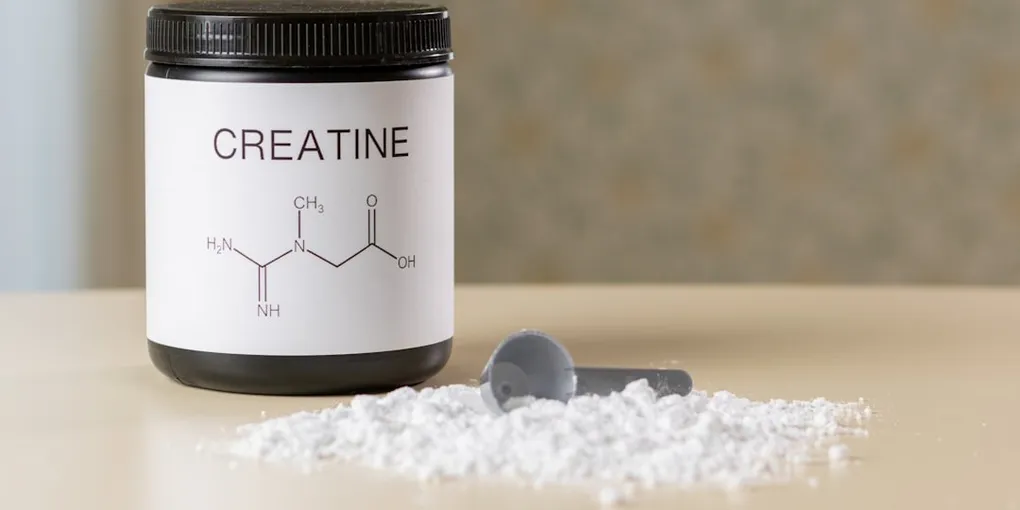
Creatine is a naturally occurring compound synthesized in the liver and kidneys from the amino acids arginine, glycine, and methionine. It is also obtained through dietary meat and fish consumption (~1–2 g/day). Approximately 95% of total body creatine is stored in skeletal muscle — about 60–70% as phosphocreatine (PCr) and the remainder as free creatine.
The primary function of phosphocreatine is to rapidly re-phosphorylate ADP to ATP during maximal-intensity efforts lasting 1–10 seconds — the phosphagen system. When PCr stores are depleted (within 5–10 seconds of all-out effort), power output falls sharply. Supplemental creatine increases muscle PCr stores by 10–40%, directly expanding this energy buffer (Casey A et al., Clinical Science, 1996; PMID: 8893377).
Mechanism: How Creatine Supports Performance
ATP-PCr Resynthesis
The immediate benefit is more phosphocreatine available for rapid ATP regeneration. This matters most for:
- Maximal sprints (10–30 seconds)
- Repeated high-power efforts with short rest (resistance training sets, interval sprints)
- Any sport requiring explosive bursts: jumps, throws, tackling
A meta-analysis by Rawson ES and Volek JS (Journal of Strength and Conditioning Research, 2003; PMID: 14636102) examining 22 studies found creatine supplementation improved strength performance (1RM) by an average of ~8% and muscular endurance (repetitions to failure) by ~14% compared to placebo.
Cell Volumization
Creatine uptake into muscle is accompanied by osmotic water retention — muscle cells become more hydrated. This intracellular hydration acts as an anabolic signal and may increase protein synthesis rates. Body mass increases of 1–3 kg are typical in the first week of loading, primarily due to this intramuscular water retention, not fat gain.
Glycogen Synthesis
Creatine appears to enhance post-exercise glycogen replenishment. Robinson TM et al. (Journal of Applied Physiology, 1999; PMID: 10484601) demonstrated that creatine co-ingested with carbohydrates post-exercise produced greater muscle glycogen synthesis than carbohydrate alone, potentially through an insulin-sensitizing mechanism in muscle tissue.
Performance Evidence: What the Trials Show
Strength and Power
The evidence for creatine’s effects on maximal strength and power is among the strongest of any supplement category. A landmark meta-analysis by Branch JD (International Journal of Sport Nutrition and Exercise Metabolism, 2003; PMID: 12945828) pooled data from 96 studies and found that:
- Creatine produced an average 8% increase in 1RM strength compared to placebo
- Peak power output in Wingate cycling tests improved by ~15% on average
- Effects were more pronounced in untrained individuals but significant in trained athletes
A subsequent meta-analysis by Lanhers C et al. (European Journal of Sport Science, 2017; PMID: 27328852) found significant improvements in both upper and lower body strength outcomes across 22 RCTs in resistance-trained adults.
High-Intensity Interval Performance
Creatine’s benefit to repeated-sprint protocols has been replicated consistently. Balsom PD et al. (Acta Physiologica Scandinavica, 1993; PMID: 8238378) showed that creatine-supplemented subjects maintained higher peak power across a series of ten 6-second cycle sprints with 30-second rest intervals — specifically in the later sprints when PCr stores are more critically depleted.
Endurance Performance
Creatine’s effects on sustained aerobic performance (>60 minutes) are minimal and inconsistent. This is expected mechanistically: the phosphagen system contributes negligibly to energy supply during prolonged submaximal exercise. Creatine is not an endurance supplement unless the training includes sustained high-intensity intervals. For athletes whose performance is primarily limited by acidic fatigue during 1–4 minute high-intensity efforts, beta-alanine is the more directly relevant ergogenic supplement.
Recovery Evidence
Recovery is an underappreciated dimension of creatine’s effects, particularly relevant for athletes training multiple times per week or competing in tournament formats.
Muscle Damage Reduction
Crameri RM et al. (Journal of Physiology, 2007; PMID: 17379639) examined creatine supplementation in subjects performing an intense eccentric exercise protocol. Creatine-supplemented subjects showed significantly attenuated increases in plasma creatine kinase (CK) — a marker of muscle membrane damage — and lower perceived muscle soreness (DOMS) scores at 24–72 hours post-exercise.
A more recent RCT by Gonzalez AM et al. (Journal of Strength and Conditioning Research, 2015; PMID: 25546453) confirmed these findings in resistance-trained men: creatine supplementation (20 g/day for 5 days before resistance exercise) reduced serum CK and lactate dehydrogenase (LDH) responses to an acute eccentric bout.
Important caveat: Creatine is not an anti-inflammatory agent in the classical sense (no significant effects on IL-6, TNF-α, or CRP have been demonstrated). The mechanism is likely a direct protective effect from enhanced PCr availability supporting cell membrane integrity during intense contraction, rather than downstream anti-inflammatory activity. Athletes seeking additional natural anti-inflammatory recovery support should review tart cherry extract, which has RCT evidence for attenuating DOMS through a complementary anthocyanin-mediated COX-inhibition mechanism.
Recovery Between Sessions
The practical implication of faster PCr resynthesis and attenuated muscle damage is that athletes can train at higher quality in subsequent sessions. A study by Yquel RJ et al. (European Journal of Applied Physiology, 2002; PMID: 12070612) showed creatine-supplemented subjects performing repeated bouts of high-intensity cycling 24 hours apart had significantly better maintained power output in the second session compared to placebo.
Top Creatine Monohydrate Products Reviewed
1. Thorne Creatine — Best Overall
Thorne’s creatine monohydrate uses Creapure® — the German-manufactured benchmark ingredient with the most extensive safety and purity documentation in the industry. NSF Certified for Sport, making it appropriate for tested athletes.
Dose: 5 g per serving | Price: ~$0.20–0.30/serving
Pros:
- Creapure® ingredient with independent purity certification
- NSF Certified for Sport — tested for banned substances
- Single-ingredient, no additives
Cons:
- Premium price relative to bulk options
G6 Composite Score: 9.1/10
| Criterion | Weight | Score | Weighted |
|---|---|---|---|
| Evidence Quality | 30% | 10.0 | 3.00 |
| Ingredient Transparency | 25% | 9.5 | 2.38 |
| Value | 20% | 7.5 | 1.50 |
| Real-World Performance | 15% | 9.0 | 1.35 |
| Third-Party Verification | 10% | 10.0 | 1.00 |
Total: 9.23
2. Optimum Nutrition Micronized Creatine — Best Value
ON’s micronized creatine is a perennial top seller for good reason: pure monohydrate, micronized for better mixability, and cost-effective at scale. Not Creapure® but independently tested.
Dose: 5 g per serving | Price: ~$0.08–0.15/serving
Pros:
- One of the lowest cost-per-serving options
- Widely available; established brand track record
- Micronized for superior dissolution
Cons:
- Not Creapure® branded; purity documentation less prominent
- No NSF/Informed Sport certification
G6 Composite Score: 8.4/10
3. Klean Athlete Creatine — Best for Tested Athletes
Klean Athlete’s creatine carries NSF Certified for Sport certification and is positioned specifically for competitive athletes who face drug testing. Uses high-purity monohydrate in a minimal formula.
Dose: 5 g per serving | Price: ~$0.35–0.45/serving
Pros:
- NSF Certified for Sport — the gold standard for tested athletes
- Clean label; no proprietary blends or unnecessary additives
- Trusted brand in sports dietetics
Cons:
- Highest cost per serving in this roundup
- Available primarily through specialty retailers
G6 Composite Score: 8.8/10
4. Bulk Supplements Creatine Monohydrate — Best Bulk Option
For athletes who want to supply their own creatine without brand premium, Bulk Supplements provides third-party tested creatine monohydrate at minimal cost. Available in quantities up to 5 kg.
Dose: 5 g per serving | Price: ~$0.04–0.08/serving at bulk quantities
Pros:
- Lowest cost per gram available from a reputable source
- Third-party tested; CoA available
- Suitable for athletes not subject to drug testing who prioritize economy
Cons:
- Bulk powder only — less convenient for travel
- No NSF/Informed Sport certification
G6 Composite Score: 7.9/10
5. Momentous Creatine — Best All-Round Premium
Momentous has rapidly established a reputation for premium purity and transparency. Their creatine uses Creapure® and carries Informed Sport certification — appropriate for elite-level competition.
Dose: 5 g per serving | Price: ~$0.30–0.40/serving
Pros:
- Creapure® + Informed Sport — dual-certified purity
- Strong brand credibility among professional athletes and sports dietitians
- Clean label, single ingredient
Cons:
- Premium pricing
G6 Composite Score: 9.0/10
Dosing Protocol
Option A: Standard Daily Dosing (Preferred for Long-Term Use)
- 3–5 g/day, every day, with or without food
- Reaches full muscle saturation in ~3–4 weeks
- No loading required; simpler, better tolerated
Option B: Loading + Maintenance
- Loading phase: 20 g/day split into 4 × 5 g doses for 5–7 days
- Maintenance: 3–5 g/day thereafter
- Reaches saturation within 1 week — useful if you want results before a competition or training block starting soon
Timing
Creatine timing is not critical. Post-exercise supplementation may have a slight edge for glycogen replenishment (Candow DG et al., Journal of the International Society of Sports Nutrition, 2014; PMID: 24568697), but the difference is small. Consistency matters more than timing.
Co-Ingestion
Taking creatine with carbohydrate and/or protein — such as a whey protein shake — increases insulin-mediated creatine uptake into muscle (Green AL et al., American Journal of Physiology, 1996; PMID: 8764181). Post-workout with a protein shake and carbohydrates is a pragmatic approach that aligns with other recovery nutrition goals.
Buying Guide: What to Look For
- Creapure® ingredient: German-manufactured creatine monohydrate with the strongest purity documentation. Not required, but represents the benchmark.
- Third-party testing: NSF Certified for Sport or Informed Sport if you compete in a tested sport. At minimum, look for independent CoA documentation.
- No proprietary blends: Creatine dose should be clearly listed; avoid products burying creatine in undisclosed blends.
- Avoid “enhanced” forms for performance: Creatine ethyl ester, buffered creatine, and other modified forms have consistently failed to outperform monohydrate in direct comparison trials (Jagim AR et al., Journal of the International Society of Sports Nutrition, 2012; PMID: 22971354). For a full head-to-head breakdown, see Creatine HCL vs Monohydrate: Which Is Better?
Bottom Line
Creatine monohydrate is the highest evidence-to-cost-ratio supplement available for athletes seeking to improve strength, power, and recovery capacity. The evidence base for performance enhancement is definitive. Recovery benefits — particularly attenuated muscle damage and faster restoration of session quality — are meaningful for athletes training under high-volume loads. Use 3–5 g/day of a pure monohydrate product (Creapure® preferred if budget allows), and allow 3–4 weeks for full saturation before evaluating effects. For specific product recommendations and pricing, see our Best Creatine Supplement review.
For evidence sourcing and scoring methodology, see our How We Test page.
Related articles:
- Best Creatine Supplement 2026: Monohydrate vs HCL Ranked
- Creatine for Brain Health: Cognitive Benefits and Evidence
- Creatine HCL vs Monohydrate: Which Is Better?
- Best Pre-Workout Supplements 2026
- Whey Protein Isolate vs Concentrate: Complete Guide
Frequently Asked Questions
- Yes. Creatine monohydrate is one of the most evidence-supported performance supplements available. Multiple meta-analyses confirm improvements in maximal strength, power output, and high-intensity exercise capacity. Effect sizes are modest but consistently reproducible across populations.
- Evidence suggests creatine reduces exercise-induced muscle damage markers (creatine kinase, DOMS ratings) and may accelerate glycogen replenishment post-exercise. It is not a primary anti-inflammatory agent, but its role in ATP resynthesis supports faster recovery of contractile function between sessions.
- The most evidence-supported maintenance dose is 3–5 g/day. Loading protocols (20 g/day for 5–7 days) saturate muscle creatine stores faster but produce the same long-term stores as consistent daily dosing after 3–4 weeks.
- No. Loading accelerates the timeline to saturation but is not required. If you want benefits within 1–2 weeks, a loading phase is useful. For long-term use, 3–5 g/day produces equivalent creatine stores by week 4.
- Creatine monohydrate has one of the most extensively documented safety profiles in sports nutrition. Long-term trials (up to 5 years) have found no adverse effects on kidney or liver function in healthy individuals. Individuals with pre-existing renal conditions should consult a physician.