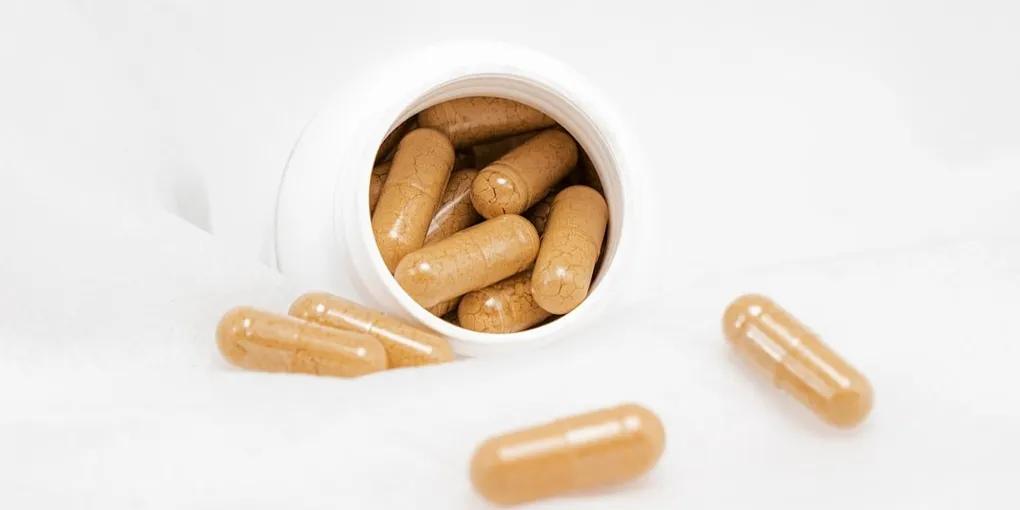
Ashwagandha KSM-66 (Jarrow Formulas)
Best Testosterone Support — Editor's PickEvidence: RCT: +17% testosterone, -27% cortisol
$25–40 / 60 capsules
Quick Comparison
| Product | Key Specs | Price Range | Buy |
|---|---|---|---|
| Ashwagandha KSM-66 (Jarrow Formulas) Best Testosterone Support — Editor's Pick |
| $25–40 / 60 capsules | Check Price on Amazon |
| Zinc + Vitamin D3 Combo (Thorne) Best Foundational Stack |
| $20–35 / 60 capsules | Check Price on Amazon |
| Tongkat Ali (Nootropics Depot) Best Adaptogen for T |
| $30–50 / 60 capsules | Check Price on Amazon |
Contains affiliate links — we may earn a small commission at no extra cost to you.
How to Increase Testosterone Naturally: The Complete Evidence-Based Guide (2026)
Testosterone is the primary anabolic hormone driving muscle mass, bone density, red blood cell production, libido, and cognitive function in men. Population-level testosterone has been declining for decades — the causes are multifactorial (environmental, dietary, lifestyle) and are genuinely concerning from a public health standpoint.
The good news is that significant portions of this decline are lifestyle-driven and reversible. The bad news is that the wellness industry’s response has been a $4 billion annual market of testosterone “booster” supplements with little evidence to justify most of their ingredients or claims.
This guide separates the effective from the ineffective, ranked by strength of evidence.
The Foundations: Highest-Impact Lifestyle Factors
1. Sleep (Strongest Evidence)
Sleep is the single most important modifiable determinant of testosterone in healthy men. Testosterone is pulsatile and circadian — the majority of daily testosterone production occurs during sleep, particularly during REM and deep slow-wave sleep.
The evidence is direct:
- A 2011 JAMA study randomized healthy men to 8 hours vs. 5 hours sleep for 1 week. The 5-hour group showed a 10–15% reduction in testosterone — equivalent to aging 10–15 years in terms of testosterone decline.
- A 2010 study in Sleep found that each additional hour of sleep was associated with a 15% increase in testosterone in young men.
Practical takeaway: Getting 7–9 hours of quality sleep consistently is the highest-return testosterone optimization strategy available. No supplement approaches the testosterone impact of correcting chronic sleep restriction.
For sleep optimization: consistent sleep timing, cool bedroom, dark room, and if needed, magnesium glycinate 300–400mg before bed.
2. Resistance Training
Progressive resistance training — particularly compound movements involving large muscle groups (squats, deadlifts, bench press, rows) — produces both acute testosterone responses and longer-term chronic adaptations.
Acute effects: Resistance exercise triggers a testosterone spike of 15–40% in the hours following training. This acute response is greatest with high-volume, moderate-to-heavy compound movements.
Chronic effects: Regular resistance training is associated with higher resting testosterone compared to sedentary controls. Meta-analyses show consistent, if modest, increases in baseline testosterone with long-term resistance training programs.
Practical target: 3–4 sessions per week of compound resistance training. Heavy compound movements (80%+ of 1RM) produce greater testosterone responses than light isolation work.
3. Body Composition (Body Fat Reduction)
Adipose tissue (body fat) contains high concentrations of the enzyme aromatase, which converts testosterone to estradiol. Elevated body fat — particularly visceral abdominal fat — accelerates this conversion, creating a vicious cycle: high fat → higher aromatase → lower testosterone → less muscle, more fat storage.
Studies consistently show that weight loss in overweight men significantly increases total and free testosterone. A 2014 study in European Journal of Endocrinology found that a 10% reduction in body weight increased testosterone by 19% in men with type 2 diabetes and hypogonadism. For men at higher body fat percentages (>25%), fat loss may be the single most impactful testosterone optimization strategy.
4. Vitamin D Sufficiency
Vitamin D functions as a steroid hormone, not just a vitamin, and vitamin D receptors (VDR) are expressed in Leydig cells — the testosterone-producing cells in the testes. Vitamin D deficiency is strongly associated with lower testosterone.
Evidence: A 2011 double-blind RCT found that men supplementing with 3,332 IU vitamin D3 daily for 1 year had significantly higher testosterone than the placebo group (+25%). Importantly, this effect was significant in vitamin D-deficient men — men already replete showed no additional benefit.
Takeaway: Test your vitamin D (25-OH vitamin D) level. If below 30 ng/mL, supplement aggressively (4,000–5,000 IU D3 daily with K2) before assessing testosterone. This single intervention can normalize testosterone in deficient men without any other changes.
See our vitamin D3 K2 guide for product recommendations.
5. Zinc Sufficiency
Zinc is a cofactor in testosterone synthesis — specifically in the pathway from cholesterol to pregnenolone to testosterone. Zinc deficiency directly impairs this pathway.
Classic evidence: A 1996 study in Nutrition found that zinc-deficient elderly men who supplemented with 25mg zinc daily for 6 months nearly doubled their testosterone levels. In athletes who sweat heavily (athletes lose significant zinc through sweat), zinc depletion and supplementation follow a similar pattern.
In men who are NOT deficient: Zinc supplementation does not raise testosterone further. This is an important distinction — zinc is not a testosterone booster for replete men; it’s a deficiency correction tool.
Test: Serum zinc levels. If below range, supplement 15–30mg zinc picolinate or bisglycinate daily. See our zinc guide.
6. Stress Management and Cortisol Reduction
Cortisol and testosterone are metabolically antagonistic. The hypothalamic-pituitary-adrenal (HPA) axis competes with the hypothalamic-pituitary-gonadal (HPG) axis — chronic stress and elevated cortisol suppress LH (luteinizing hormone) and reduce testosterone production.
Chronic work stress, sleep deprivation, overtraining, and caloric restriction all activate the HPA axis. The practical implications:
- Overtraining (insufficient recovery between sessions) suppresses testosterone
- Chronic caloric deficit suppresses testosterone
- Sleep deprivation (as above) is a major cortisol driver
Ashwagandha (KSM-66, 600mg/day) is the supplement with the strongest evidence for reducing cortisol and secondarily improving testosterone. A 2015 RCT in the Journal of the International Society of Sports Nutrition found KSM-66 ashwagandha significantly reduced cortisol and increased testosterone by 15% compared to placebo in stressed, recreationally active men over 8 weeks.
See our full ashwagandha guide.
Supplements With Meaningful Evidence
Tongkat Ali (Eurycoma longifolia, 200–400mg/day)
Tongkat ali is a Malaysian root traditionally used as a male aphrodisiac. Modern research supports modest testosterone-elevating effects, particularly in men with stress-related suppression.
Evidence: A 2013 pilot study in Phytotherapy Research found 200mg standardized tongkat ali extract daily for 1 month significantly increased testosterone in men with late-onset hypogonadism. A 2022 double-blind RCT found significant testosterone increases and improved muscle strength vs. placebo.
Ashwagandha KSM-66 (600mg/day)
As noted above — primary mechanism is cortisol reduction leading to secondary testosterone recovery, rather than direct testosterone stimulation. Most useful in men with high stress load.
Fenugreek (500–600mg/day)
Fenugreek’s primary mechanism for testosterone effects is inhibition of aromatase (estrogen synthesis) and 5-alpha reductase, thereby shifting the androgen/estrogen ratio. Evidence is mixed — some studies show significant free testosterone increases; others show no effect. More consistent effects seen in research from one manufacturer (Furosap), raising questions about independence.
Vitamin D3 + K2
As above — only for deficient men, but the effect in deficient men is significant.
Zinc
As above — only for deficient men.
What Doesn’t Work (Well)
Tribulus terrestris: Despite its traditional reputation and widespread use in testosterone boosters, multiple well-designed RCTs show tribulus does not significantly increase testosterone in healthy men. A 2005 study in Journal of Ethnopharmacology found no testosterone changes in healthy young men. Skip it.
D-aspartic acid (DAA): Studies in healthy, trained men show inconsistent and often negative results for testosterone. Some early studies in untrained, low-testosterone men showed increases that haven’t replicated in better-controlled trials.
Proprietary “testosterone booster” stacks: These products typically underdose ingredients with actual evidence (ashwagandha, zinc, D3) and combine them with the above ineffective compounds. Purchasing individual effective ingredients is more cost-effective and evidence-based.
The Priority Order
If you want to optimize testosterone through lifestyle, address these in order:
- Sleep — 7–9 hours, consistent schedule
- Body fat — if over 20–25%, fat loss is highest priority
- Vitamin D — test and correct if deficient
- Zinc — test and correct if deficient
- Resistance training — 3–4x/week heavy compound lifts
- Stress and cortisol — ashwagandha, sleep, stress management
- Dietary fat — testosterone requires cholesterol and dietary fat; very low-fat diets suppress testosterone
- Tongkat ali — if other factors are optimized and testosterone remains suboptimal
When to See a Doctor
If you’ve addressed all lifestyle factors and still have symptoms of low testosterone (chronic fatigue, low libido, reduced muscle mass, depression), a medical evaluation is appropriate. Hypogonadism has multiple causes beyond lifestyle — including pituitary tumors, testicular disorders, and medication side effects — that require medical management, not supplement optimization.
Total testosterone below 300 ng/mL with symptoms warrants evaluation for testosterone replacement therapy. TRT is a medical treatment, not a lifestyle supplement, and produces physiological changes that natural optimization cannot replicate.
Evidence base: Leproult R & Van Cauter E, JAMA (2011) on sleep and testosterone; Pilz S et al., Hormone and Metabolic Research (2011) on vitamin D; Prasad AS, Nutrition (1996) on zinc; Wankhede S et al., JISSN (2015) on ashwagandha; Travison TG et al., JCEM (2007) on population testosterone decline.
Related Articles
- Best Testosterone Booster Supplement 2026
- Best Maca Root Supplement
- Best Saw Palmetto Supplement
- Best Turkesterone Supplement
Frequently Asked Questions
- Normal total testosterone in adult men is generally defined as 300–1,000 ng/dL by most clinical guidelines, with free testosterone (the biologically active fraction) at approximately 9–30 ng/dL. However, 'normal range' reflects population distribution rather than optimal health. Research from Travison et al. (2007) documented a population-level decline of approximately 1% per year in testosterone levels in American men from 1987 to 2004 — meaning a man with 'normal' testosterone by today's reference range may have much lower levels than his equivalent-age counterpart 30 years ago. Symptoms of low testosterone (fatigue, reduced libido, poor recovery, mood changes, reduced muscle mass) can occur even at the 'normal' range lower bound.
- The honest answer is that natural lifestyle optimization can raise testosterone meaningfully but is unlikely to produce the dramatic increases seen with TRT (testosterone replacement therapy). Studies on sleep optimization show 10–15% increases in testosterone. Resistance training produces acute and modest chronic increases. Correcting zinc or vitamin D deficiency can produce significant increases in deficient men. Losing excess body fat (adipose tissue converts testosterone to estradiol via aromatase) can substantially raise testosterone in overweight men. Combined lifestyle optimization in men with suppressed testosterone from lifestyle factors might produce increases of 20–40%. This is meaningful but different from the 300–500% increases from TRT.
- Yes, though the relationship is nuanced. Short-term fasting (16–24 hours) acutely raises testosterone in some studies via increased LH (luteinizing hormone) pulses. However, chronic severe caloric restriction (crash dieting) reliably suppresses testosterone because the hypothalamic-pituitary-gonadal axis is sensitive to energy availability — low energy states signal that reproduction and anabolism are not priorities. The sweet spot is being at or slightly above maintenance calories with adequate dietary fat and protein, rather than chronic restriction.
- Most do not produce clinically meaningful testosterone increases. The ingredients with the strongest evidence — zinc (in deficient men), vitamin D (in deficient men), ashwagandha (300–600mg KSM-66 in stressed/sub-optimal men), and tongkat ali — produce modest effects primarily by correcting deficiencies or reducing cortisol. Proprietary testosterone booster blends with 15+ ingredients typically use sub-clinical doses of marginally-studied compounds. Fenugreek, tribulus terrestris, and D-aspartic acid have inconsistent results across trials. The 'testosterone booster' category is one of the most marketing-driven in supplements with one of the weakest aggregate evidence bases.
- No. This is a persistent myth without clinical support. A 2001 study in World Journal of Urology found no significant differences in testosterone levels between periods of abstinence and normal sexual activity. Short-term (3-week) abstinence in one small study showed a transient testosterone peak, but this was not sustained and is not considered clinically significant. Testosterone levels are not meaningfully altered by sexual activity frequency in healthy men.